TL;DR & Key Takeaways
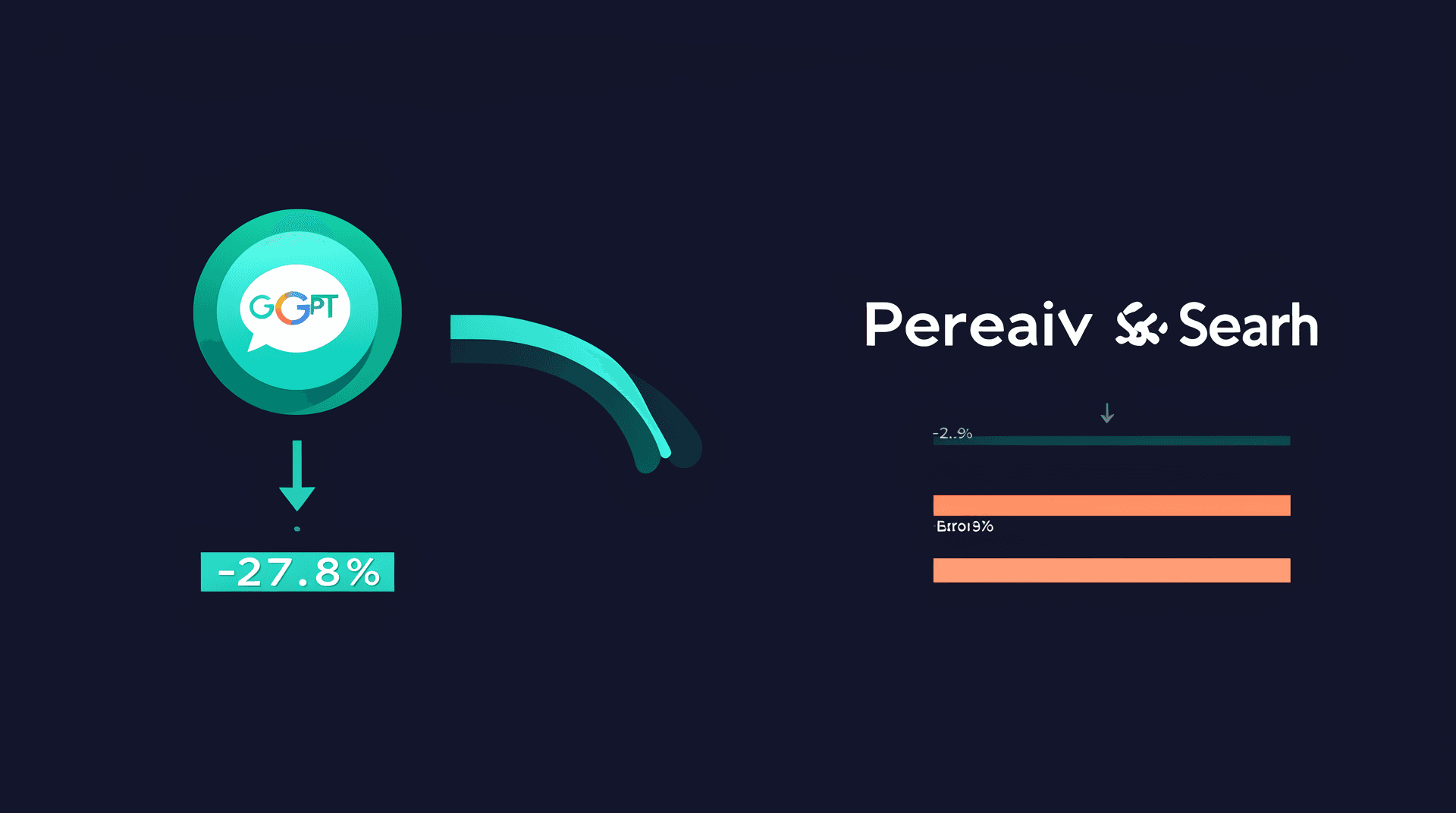
A February 2026 study of 11 sites hit by Google's algorithm update proves AI platforms use different retrieval pipelines. ChatGPT citations dropped 27.8% — worse than Google's own AI Mode (-23.8%) — while Perplexity barely moved (-2.9%). ChatGPT appears to scrape Google during live searches, so Google rankings control ChatGPT visibility. Perplexity uses the Brave Search API instead, making it immune to Google ranking shifts. You need a separate optimization playbook for each platform.
- Track AI citations separately for each platform — Lily Ray's study shows ChatGPT citations dropped 27.8% after Google ranking losses while Perplexity moved only 2.9%, proving each AI engine uses a different retrieval pipeline.
- Maintain strong Google rankings specifically for ChatGPT visibility — multiple lines of evidence show ChatGPT scrapes Google during live web searches, making your Google SEO the single most important factor in earning ChatGPT citations.
- Optimize for Brave Search independently to earn Perplexity citations — Perplexity uses the Brave Search API rather than Google's index, so your Google rankings have almost no effect on whether Perplexity cites your content.
- Allow PerplexityBot crawling and build presence on UGC platforms like Reddit and YouTube — these are disproportionately cited by Perplexity because its retrieval favors experiential, multi-perspective content over traditional web pages.
- Implement a multi-platform GEO strategy that treats each AI search engine as a separate channel — monitoring citation trends on ChatGPT, Perplexity, AI Mode, and Gemini independently with tools like Ahrefs Brand Radar.
Frequently Asked Questions
Does ChatGPT use Google search results?
While OpenAI has not officially confirmed it, a growing body of evidence from independent researchers and industry analysts strongly suggests ChatGPT scrapes Google during live web searches. Lily Ray's February 2026 study found that ChatGPT citation declines (-27.8%) were actually worse than Google's own AI Mode (-23.8%) when sites lost Google organic rankings, indicating a direct pipeline from Google's index to ChatGPT's citations.
Why does Perplexity cite different sources than ChatGPT?
Perplexity uses the Brave Search API and its own PerplexityBot crawler for source retrieval, rather than Google's index. This means Perplexity evaluates content on completely different ranking signals than ChatGPT. In Lily Ray's study, some sites actually gained Perplexity citations while losing Google rankings, confirming that the two platforms operate on independent retrieval pipelines.
Should I optimize differently for ChatGPT and Perplexity?
Yes. For ChatGPT, your priority is maintaining strong Google organic rankings, keeping content fresh, and building domain-level authority. For Perplexity, focus on Brave Search visibility, allow PerplexityBot to crawl your site, and build presence on UGC platforms like Reddit and YouTube that Perplexity frequently cites. A single strategy will not optimize both platforms effectively.
How do I track my AI search citations across platforms?
Tools like Ahrefs Brand Radar now track AI search citations across ChatGPT, Perplexity, Google AI Mode, and Gemini over time. Google Search Console also recently added generative AI performance reports showing which pages appear in AI Overviews and AI Mode. Track each platform separately because citation trends can move in opposite directions.
What is Brave Search and why does it matter for AI visibility?
Brave Search is an independent search engine that maintains its own web index, separate from Google and Bing. It matters for AI visibility because Perplexity uses the Brave Search API as a core part of its retrieval pipeline. If your content ranks well in Brave Search, it has a direct path to being cited in Perplexity's AI answers — regardless of your Google rankings.
Glossary
- AI Search Citation
- An instance where an AI-powered search engine like ChatGPT, Perplexity, or Google AI Mode references and links to a specific web page as a source in its generated answer. Unlike traditional blue-link clicks, citations represent a new form of visibility where the AI acts as an intermediary between the searcher and the source.
- Brave Search API
- An independent search engine API maintained by Brave Software that provides web search results from its own index, separate from Google and Bing. It is believed to be a core retrieval source for Perplexity's AI answers, which is why Perplexity citation patterns do not correlate with Google rankings.
- PerplexityBot
- Perplexity's proprietary web crawler that supplements third-party search APIs with its own direct web crawling. Sites that allow PerplexityBot access in their robots.txt give Perplexity an additional path to discover and cite their content independently of any search engine index.
- Reranking
- The process by which an AI search system re-evaluates and re-orders candidate sources after initial retrieval from a search index. ChatGPT uses multiple reranking layers that consider domain trust, recency, and relevance to decide which sources to cite in its generated answers.
- Multi-Platform GEO
- A Generative Engine Optimization strategy that treats each AI search platform — ChatGPT, Perplexity, Google AI Mode, Gemini — as a separate channel requiring its own optimization approach, tracking, and measurement, rather than applying a single strategy across all AI engines.
Sources
- Search Engine Journal — Are Citations In AI Search Affected By Google Organic Visibility Changes? - Lily Ray's February 2026 analysis of 11 sites hit by Google's January algorithm update, tracking citation declines across ChatGPT (-27.8%), Google AI Mode (-23.8%), and Perplexity (-2.9%).
- Metehan.ai — AI Search & SEO Research - Metehan Yesilyurt's research on ChatGPT's internal architecture, including discovery of reranking parameters, recency bias settings, and domain trust signals in ChatGPT Search's source code.
- Brave Search API - Brave Search's independent search API, which is believed to power part of Perplexity's retrieval pipeline alongside PerplexityBot's own web crawler.
- Sistrix U.S. Visibility Index - The visibility tracking tool used in Lily Ray's study to measure organic search visibility changes across the 11 analyzed domains before and after Google's January 2026 algorithm update.
Related Articles
Google Search Console AI Reports: What the New Data Actually Shows
Google just launched the first-ever AI search visibility report in Search Console, plus an opt-out toggle for AI Overviews and AI Mode. Here's what the data covers, what's missing, and how to use it for your GEO strategy.
7 min readGoogle Preferred Sources: The AI Visibility Lever You Missed
Google brought Preferred Sources into AI Overviews and AI Mode. With 345K sources selected and 2x click-through rates, this is the first user-driven signal inside AI answers. Here is how to get your audience to add you.
6 min readAI SEO in 2026: How to Get Cited by the Machines That Replaced Google
Your customers stopped searching and started asking. AI SEO is how you become the answer. Here's the complete playbook for getting your products cited by ChatGPT, Perplexity, and Google AI Overviews.